For travellers interested in Saudi heritage, AlUla Old Town is an important part of a wider itinerary that can also include Hegra, Dadan, Jabal Ikmah, the Oasis and other destinations across AlUla.
What Is AlUla Old Town?
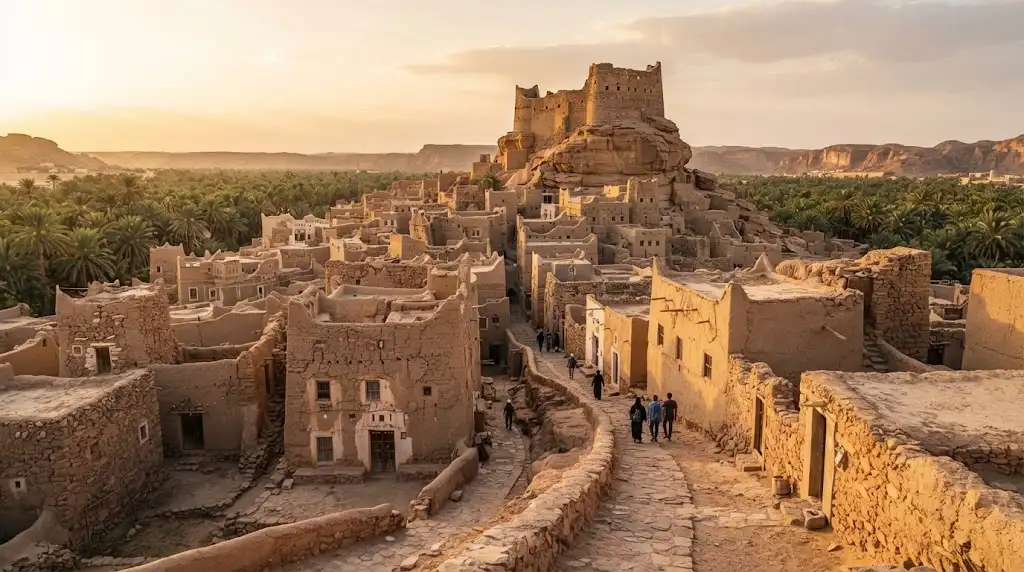
AlUla Old Town is a historic settlement made up of hundreds of mudbrick houses and interconnected alleyways. According to Experience AlUla, the settlement dates back almost a millennium, with the town developing from around the 12th century along ancient incense trading routes and the pilgrimage route connecting Damascus with Makkah.
The town was not simply a collection of old buildings. It was a functioning community where people lived, traded, travelled and built their daily lives around the valley’s agricultural and commercial environment. This is what makes the destination particularly interesting for visitors: the heritage is closely connected to the landscape and the story of the people who lived there.
The historic settlement was also protected by a fort overlooking the town. The surrounding architecture, lanes and elevated viewpoints help visitors understand how the community was organized and why its location was important.
Why Is AlUla Old Town Called a Living Museum?
The phrase “living museum” is useful for describing the way AlUla’s heritage can be experienced beyond traditional museum displays. Visitors do not simply look at objects behind glass. They can walk through historic streets, see mudbrick architecture, explore traditional commercial spaces and experience cultural storytelling within the historic environment.
Experience AlUla describes Old Town as a place where history becomes tangible through its winding paths, heritage buildings and active streets. The destination continues to combine historic character with contemporary visitor experiences, including cafés, shops, crafts and guided tours.
This combination gives Old Town a different character from a conventional archaeological site. The experience is as much about the atmosphere and relationship between architecture, community and landscape as it is about individual historic structures.
The History Behind AlUla Old Town
AlUla’s location has long been connected to movement across northwestern Arabia. Trade routes helped connect communities and commercial centers across the region, while pilgrimage routes brought travellers through the valley on journeys toward Makkah.
The old settlement that visitors see today reflects a much later phase of this long history. Its mudbrick buildings and dense network of lanes developed around the needs of a settled community. The architecture also reflects the availability of local materials and the environmental conditions of the valley.
Historic AlUla should therefore be understood as part of a much larger cultural landscape. Nearby archaeological locations, ancient settlements, inscriptions, agricultural areas and natural formations provide additional layers to the story.
What to See in AlUla Old Town
One of the best ways to appreciate Old Town is simply to explore it on foot. Its narrow pathways reveal different views of mudbrick walls, restored buildings, small courtyards and the surrounding landscape.
Mudbrick Houses and Historic Alleys
The mudbrick architecture is one of Old Town’s defining features. Hundreds of historic homes were arranged closely together, creating a dense settlement with winding paths between the buildings.
Walking through these alleys provides a better understanding of the scale and character of the historic community than viewing photographs alone. The texture of the walls, changing elevations and relationship between buildings and the surrounding oasis make the walking experience an important part of the visit.
AlUla Fort
The historic fort overlooking Old Town provides another perspective on the settlement and the surrounding valley. From elevated areas, visitors can better appreciate the relationship between the old settlement, the oasis and the dramatic landscape beyond.
Current official Old Town experiences can include access to areas around the fort as part of guided tours, subject to the applicable experience arrangements.
Old Town Market Street
The market area adds a contemporary layer to the heritage experience. Visitors can browse local handicrafts, souvenirs, jewellery, art, food and coffee offerings while walking through the historic environment.
This combination of heritage surroundings and active commercial spaces is one reason Old Town feels different from a purely archaeological attraction.
Local Storytelling
Guided experiences led by local Rawi storytellers can add context to the buildings and streets. Rather than simply pointing out architectural features, storytelling experiences connect the physical environment with stories of families, trade, pilgrimage and community life.
AlUla Old Town and the Oasis
The relationship between Old Town and the AlUla Oasis is essential to understanding the area’s history. The oasis provided agricultural resources and supported settlement in the valley, creating a close connection between homes, farming and water.
The landscape around the town therefore tells part of the same story as its buildings. Palm groves, farmland and historic waterways illustrate how communities adapted to the environment and developed a sustainable way of life around the oasis.
Visitors interested in this relationship can combine Old Town with an exploration of the AlUla Oasis, creating a more complete picture of the valley’s heritage.
AlUla Old Town vs. Hegra
Old Town and Hegra are both central to AlUla’s heritage story, but they offer very different experiences.
AlUla Old Town focuses on the history of a settled community, with homes, streets, marketplaces and the surrounding oasis providing the main context. Hegra, meanwhile, is an archaeological site associated with the Nabataean civilization and is known for monumental tombs carved into sandstone.
Hegra is Saudi Arabia’s first UNESCO World Heritage Site and contains more than 100 monumental Nabataean burial tombs. It is best experienced through an organized tour, while Old Town can be explored through its pedestrian streets and guided heritage experiences.
For visitors with enough time, seeing both provides two complementary perspectives on AlUla’s history rather than treating them as interchangeable attractions.
Other Heritage Sites to Add to an AlUla Itinerary
Old Town works particularly well as part of a broader heritage-focused trip around AlUla.
Dadan
Dadan is an ancient city associated with earlier civilizations of the AlUla Valley. Its archaeological remains provide another perspective on the communities that occupied the region before the later development of Old Town.
Jabal Ikmah
Jabal Ikmah is known for its rock inscriptions and is an important destination for understanding the written and cultural history of ancient AlUla.
Hegra
Hegra offers one of the region’s most recognizable archaeological landscapes, with monumental sandstone tombs and remains connected to the Nabataean civilization.
AlUla Oasis
The Oasis provides an important environmental and agricultural dimension to an AlUla itinerary. Exploring it alongside Old Town helps visitors understand how settlement and agriculture were connected in the valley.
Maraya
For a contrast between ancient heritage and contemporary architecture, visitors can include Maraya in their itinerary. Its reflective façade creates a striking modern landmark within AlUla’s desert landscape.
When Is the Best Time to Visit AlUla Old Town?
The most comfortable time for exploring AlUla’s outdoor heritage attractions generally depends on weather conditions and the season. Because Old Town involves walking outdoors, visitors should consider temperatures, sunlight and the amount of time they intend to spend on foot.
Even during a suitable season, conditions can vary during the day. Early or later visits may provide a more comfortable walking environment, while the official Experience AlUla platform should be checked for current opening arrangements, tours and scheduled experiences.
Event schedules can also change throughout the year, so visitors planning around a particular festival or cultural experience should verify the current dates before travelling.
How to Experience AlUla Old Town
There are several ways to explore the area depending on how much historical context you want during your visit.
Explore Independently
Visitors can walk through the publicly accessible areas of Old Town and discover its streets, shops, cafés and market spaces at their own pace. This approach works well for travellers who prefer photography, shopping and relaxed exploration.
Join a Guided Tour
A guided Old Town experience can provide considerably more historical context. Current official experiences use local Rawi storytellers to explain the area’s community history, trade connections and cultural heritage.
Guided experiences can also provide access to particular heritage spaces or viewpoints that may not be part of an independent visit.
Combine Old Town with the Oasis
Combining the old settlement with the Oasis creates a stronger heritage narrative. Instead of viewing the buildings separately from the surrounding environment, visitors can see how agriculture, water, settlement and trade were interconnected.
Practical Tips for Visiting AlUla Old Town
- Wear comfortable shoes because exploring the historic area involves walking.
- Carry water, particularly when spending extended periods outdoors.
- Check current opening information and tour availability before travelling.
- Consider a guided experience if you want more historical and cultural context.
- Respect local customs when photographing residents and other visitors.
- Allow time to explore the market, cafés and cultural spaces rather than rushing through the historic lanes.
- Check official Experience AlUla information for current events and seasonal experiences.
- Consider combining Old Town with Hegra, Dadan, Jabal Ikmah or the Oasis for a broader heritage itinerary.
Is AlUla Old Town Worth Including in a Saudi Trip?
For travellers interested in Saudi Arabia’s history and culture, Old Town offers a different experience from a conventional tourist attraction. Its importance comes from the combination of architecture, landscape, community history and ongoing cultural activity.
Rather than presenting AlUla’s past as something completely separate from the present, Old Town allows visitors to experience heritage within a destination that continues to welcome residents, businesses, artisans and travellers.
That makes it particularly useful for visitors who want to understand more than the headline attractions. A walk through Old Town can provide context for the wider AlUla Valley and help connect the area’s ancient trade routes, agricultural traditions and archaeological sites into one broader story.
Planning an AlUla Heritage Itinerary
A well-planned AlUla trip can combine several different types of heritage experiences. Start with Old Town to understand the history of settled life in the valley, then explore the Oasis to see its agricultural foundation.
From there, Hegra, Dadan and Jabal Ikmah can add archaeological and inscription-based perspectives. Modern destinations such as Maraya can then show how contemporary architecture and cultural programming are being incorporated into AlUla’s evolving tourism landscape.
For another practical perspective on the destination, explore the AlUla heritage guide alongside DearSaudi’s other Saudi travel resources. Visitors interested in Saudi urban transportation can also refer to the Riyadh Metro guide, while those planning coastal travel can explore the Red Sea islands travel guide.
Final Thoughts
AlUla Old Town offers one of the clearest ways to experience the human history of the AlUla Valley. Its mudbrick houses, winding streets, historic market areas, fort and connection with the Oasis reveal how generations of communities lived and worked within this landscape.
The “living museum” idea captures part of what makes the destination distinctive, but the real value of Old Town is found in the details: the architecture, the stories, the landscape and the relationship between heritage and contemporary life.
For visitors planning an AlUla trip, Old Town deserves to be considered alongside Hegra, Dadan, Jabal Ikmah and the Oasis rather than as an isolated attraction. Together, these destinations provide a much richer understanding of AlUla’s heritage and its continuing role in Saudi Arabia’s cultural tourism landscape.