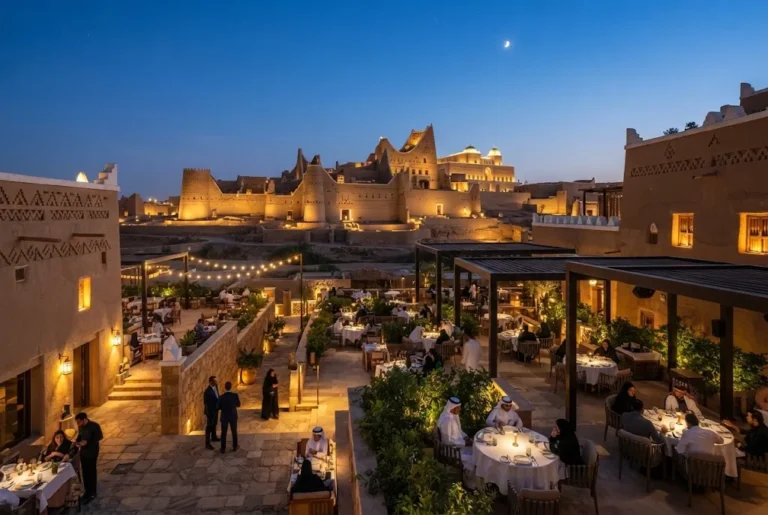
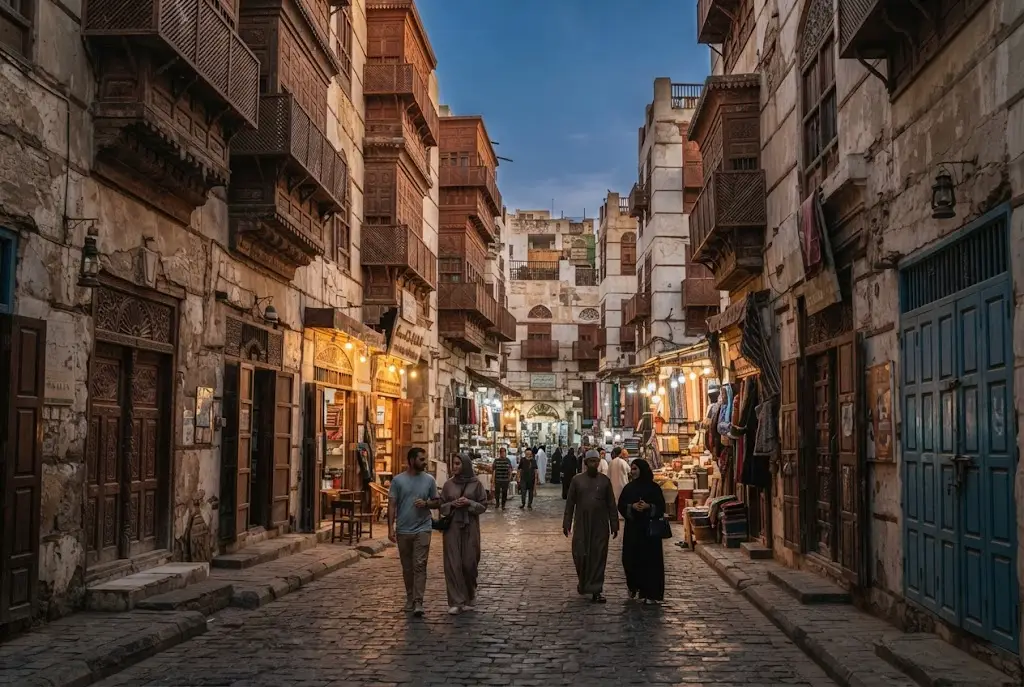
Officially known as Historic Jeddah, the Gate to Makkah, Al-Balad is a UNESCO World Heritage Site. Its history is closely connected to the Red Sea, international trade and the movement of pilgrims traveling toward Makkah. UNESCO describes Historic Jeddah as an important port from the 7th century onward and highlights its distinctive coral construction, tower houses, wooden roshans, souqs and multicultural heritage.
Today, Al-Balad remains a living part of Jeddah rather than a preserved museum district that exists only for tourists. Traditional markets, cafés, restaurants, heritage houses, cultural spaces and everyday commercial activity continue to shape the area.
This guide explains what makes Jeddah Al-Balad special, what to see, which historic markets and houses to look for, what to eat, how long to spend there and how to build a memorable visit.
What Is Jeddah Al-Balad?
Al-Balad means “the town” or “the old town” and is the historic district at the center of Jeddah.
The area developed as a major Red Sea port and became particularly important because of its connection to Makkah and the pilgrimage routes. For centuries, merchants, pilgrims and residents from different parts of the world passed through Jeddah, creating a multicultural environment that remains part of the city’s identity.
UNESCO notes that Historic Jeddah developed as a commercial and pilgrimage city, with its architecture and urban structure reflecting the influence of trade routes across the Red Sea and Indian Ocean.
That history explains why Al-Balad feels different from many other historic districts in the Arabian Peninsula. Its architecture was shaped not only by local traditions but also by the movement of people, goods, ideas and building techniques between Arabia, Africa, Asia and the wider Indian Ocean world.
Why Is Historic Jeddah a UNESCO World Heritage Site?
Historic Jeddah was inscribed on the UNESCO World Heritage List in 2014.
Its significance comes from the complete relationship between architecture, urban form, trade and pilgrimage. Rather than one isolated monument, Al-Balad preserves an urban landscape made up of houses, mosques, markets, public spaces and commercial buildings.
UNESCO particularly highlights the district’s coral-stone houses and large wooden roshans. These buildings demonstrate how Jeddah’s residents adapted architecture to the hot and humid Red Sea climate while creating distinctive façades.
The district also represents the historic role Jeddah played as a gateway for pilgrims arriving by sea before continuing toward Makkah.
The Story Behind Jeddah’s Coral-Stone Houses
One of the first things visitors notice in Al-Balad is the appearance of its historic buildings.
Many traditional houses were constructed using coral stone sourced from the Red Sea environment. These structures were combined with wooden elements and architectural techniques designed for Jeddah’s hot, humid coastal climate.
The result is a distinctive architectural language that combines thick walls, tall structures, narrow streets and large wooden windows.
UNESCO describes the coral masonry and wooden façade decoration as important characteristics of Historic Jeddah’s architectural tradition.
What Are Roshan Windows?
The roshan, sometimes written as rawashin, is one of the most recognizable elements of traditional Jeddah architecture.
These projecting wooden window structures extend outward from the façades of historic homes. Their decorative wooden screens provide shade and privacy while helping regulate light and airflow.
Rather than being purely decorative, the roshan developed as a practical architectural response to Jeddah’s coastal climate and social environment.
UNESCO identifies Jeddah’s large decorated roshan façades as an especially distinctive architectural feature of the historic city.
For photographers and architecture enthusiasts, these wooden details are among the most memorable visual features of Al-Balad.
Best Things to Do in Jeddah Al-Balad
You do not need to visit Al-Balad with a rigid checklist. Much of its appeal comes from walking through the historic streets and discovering architectural details, shops and food along the way.
However, several experiences are particularly worthwhile.
1. Walk Through the Historic Streets
Start by simply exploring the lanes of Al-Balad.
Look upward as you walk. Some of the most interesting details are above street level: carved wooden windows, balconies, old façades, decorative doors and restored heritage buildings.
The contrast between weathered historic structures and carefully restored buildings is part of the character of the district.
2. Explore the Traditional Souqs
Markets are central to the Al-Balad experience.
Current Visit Saudi information highlights several historic markets, including Souq Al-Alawi, Souq Qabil, Souq Al-Jamei and other traditional commercial areas.
These markets offer opportunities to browse spices, incense, textiles, jewelry, traditional products, gifts and everyday goods.
3. Visit Historic Heritage Houses
Al-Balad contains several important historic houses that help visitors understand how wealthy merchant families and residents once lived.
Current Visit Saudi information highlights heritage houses including Bait Al-Mutbuli, Bait Al-Sharbatly and Bait Ba’eshen, where visitors can see traditional architectural details and roshan designs.
4. See Nasseef House
Nasseef House is one of the best-known historic buildings in Jeddah.
The large coral-stone mansion was built in 1881 for merchant Omar Nasseef Efendi. Visit Saudi describes it as a 106-room historic house featuring carved roshan windows, roof-level rooms and distinctive stairways.
The building later became associated with King Abdulaziz and remains one of the most recognizable landmarks in historic Jeddah.
5. Stop for Traditional Coffee
Food and drink are an important part of experiencing Al-Balad.
Visit Saudi currently highlights Diyab Coffee as the oldest café in Al-Balad and also lists contemporary cafés such as 1/15 Neighborhood Cafe within the historic district.
For visitors interested in Saudi coffee more broadly, our Saudi specialty coffee guide provides a deeper look at beans, roasting, brewing and the country’s evolving coffee culture.
Souq Al-Alawi: One of Al-Balad’s Most Recognizable Markets
Souq Al-Alawi is one of the most recognizable traditional markets in Historic Jeddah.
Visit Saudi describes it as one of the largest traditional markets in Saudi Arabia, with lanes containing spices, incense, textiles, jewelry and food.
The market is particularly atmospheric toward the evening, when the temperature becomes more comfortable and the narrow streets become more active.
It is also a good place to experience one of the defining characteristics of Al-Balad: commerce remains part of the historic environment rather than being recreated solely as a tourist attraction.
Souq Qabil and Other Historic Markets
Souq Qabil is another important market in the historic district. Visit Saudi currently identifies it as one of Al-Balad’s important commercial markets, particularly associated with gold shops.
Other historic markets include Souq Al-Jamei, Souq Al-Khaskeya, Souq Nada, Bab Al-Makkah Souq and Bab Shareef.
Each market contributes to the broader commercial character of Historic Jeddah rather than functioning as an isolated attraction.
Bab Makkah Souq
Bab Makkah is another useful stop for visitors exploring Jeddah’s traditional commercial landscape.
The market area has a long history and remains associated with spices, nuts, dried fruits, herbs, perfumes, henna and other everyday and traditional products.
For visitors interested in food, it can be particularly interesting because many of the aromas and ingredients associated with Saudi and wider Hijazi cooking appear directly within the market environment.
What Food Should You Try in Al-Balad?
One of the best ways to experience Jeddah’s history is through food.
The city’s location on the Red Sea and centuries of contact with merchants and pilgrims from different parts of the world have contributed to a diverse culinary culture.
When exploring Al-Balad, look for opportunities to try:
- Traditional Hijazi dishes
- Rice and meat dishes
- Local breads
- Dates and sweets
- Saudi coffee
- Tea and spiced drinks
- Fresh juices
- Street-food snacks
- Local pastries and baked goods
Current Visit Saudi information also highlights traditional food and bakery experiences within Al-Balad, including Forn Al Sheikh, described as a historic bakery serving traditional bread.
Why Jeddah Food Culture Is Different
Jeddah’s food culture reflects its position as a historic Red Sea port.
For centuries, the city connected Arabia with trading networks reaching across Africa, Asia and the Indian Ocean. The movement of people and goods contributed to a culinary culture that is more outward-looking and multicultural than the architecture alone might suggest.
This history is still visible in Al-Balad’s markets, ingredients, restaurants and cafés.
It is one reason Jeddah works particularly well as a food-and-culture destination rather than simply a stopover city.
Al-Balad at Sunset and After Dark
Al-Balad takes on a different character as the day cools down.
The narrow streets, illuminated heritage façades, cafés and markets create an atmosphere that is very different from visiting during the hottest part of the afternoon.
Current Visit Saudi programming specifically highlights cultural evenings in Historic Jeddah, including markets, cafés, heritage houses and artistic experiences.
If your schedule allows, an evening visit can therefore work particularly well for combining architecture, shopping, food and photography.
How Long Do You Need in Jeddah Al-Balad?
A quick walk through Al-Balad can take a couple of hours, but that is not enough time to experience everything the district offers.
For a more relaxed visit, allow approximately half a day.
This gives you enough time to:
- Explore the historic lanes
- Visit selected heritage houses
- Walk through traditional souqs
- Stop for coffee
- Try local food
- Take photographs
- Explore cultural experiences
If you are particularly interested in architecture, museums or guided history tours, you may want to spend longer.
Should You Take a Guided Tour of Al-Balad?
A self-guided walk can be rewarding, especially if you enjoy discovering markets and architecture at your own pace.
A guided tour adds another layer because many of Al-Balad’s most interesting stories are not obvious from the buildings themselves.
Visit Saudi currently lists an official guided historical tour of Al-Balad, updated in August 2026, focused on the stories behind Historic Jeddah.
For first-time visitors who want historical context, a guided experience can help explain the relationship between Jeddah’s port, pilgrimage routes, merchant families, architecture and multicultural identity.
Jeddah Al-Balad for Families
Al-Balad can be an interesting family destination because it combines walking, food, shopping and history rather than relying on a single attraction.
Families can explore the markets, look at historic houses, stop at cafés and introduce children to a different side of Saudi urban history.
Because the district involves walking through older streets and outdoor areas, comfortable footwear and consideration of weather conditions are important.
Jeddah Al-Balad for Photography
Architecture is the main attraction for photographers in Al-Balad.
Look for the contrast between coral-stone walls and dark wooden roshans, narrow streets and larger plazas, restored façades and weathered buildings.
Early morning can provide softer light and quieter streets, while evening offers illuminated façades and a livelier atmosphere.
Always respect privacy when photographing residents, shopkeepers and visitors, and follow restrictions inside heritage buildings or cultural venues.
Jeddah Al-Balad and the Red Sea
One of the strengths of a Jeddah itinerary is the ability to combine historic culture with the Red Sea coastline.
Jeddah is fundamentally a coastal city, and the modern waterfront provides a very different experience from Al-Balad.
Visit Saudi currently describes Jeddah as a city where historic coral architecture sits alongside lively waterfronts, beaches, contemporary districts, dining and entertainment.
This makes it possible to build a day around two distinct sides of the city: historic Jeddah in the older center and the Red Sea waterfront later in the day.
Jeddah Al-Balad and Jeddah Corniche
If you have additional time after exploring Al-Balad, consider continuing toward the Jeddah Corniche.
The Corniche provides a modern coastal contrast to the old city’s dense streets and heritage architecture.
Visitors can experience public waterfront spaces, views of the Red Sea, restaurants and contemporary attractions.
The combination is particularly useful for travelers who want to understand Jeddah as both a historic trading city and a modern Red Sea destination.
What Makes Al-Balad Different From Other Saudi Heritage Destinations?
Saudi Arabia has several important heritage destinations, but Al-Balad has a particularly strong connection to maritime trade and pilgrimage.
AlUla, for example, is strongly associated with ancient archaeological landscapes and dramatic desert geography. Diriyah is closely connected to the history of the Saudi state and Najdi heritage.
Historic Jeddah tells a different story: one shaped by the Red Sea, international commerce, pilgrimage and a multicultural urban population.
That distinction makes Al-Balad an important addition to a wider Saudi heritage itinerary.
For another major Saudi heritage destination, see our AlUla heritage guide.
How Jeddah Al-Balad Connects to Saudi Coffee Culture
Coffee is an easy bridge between Saudi Arabia’s traditional hospitality and its contemporary café culture.
In Al-Balad, visitors can experience coffee in a historic urban setting, while elsewhere in Jeddah the specialty coffee scene has developed into a modern part of the city’s food culture.
This creates a useful connection between heritage and contemporary Saudi lifestyle: the surroundings may be centuries old, but the café culture continues to evolve.
Our Saudi specialty coffee guide explores this broader transformation in more detail.
Practical Tips for Visiting Jeddah Al-Balad
- Wear comfortable shoes because exploring Al-Balad involves walking.
- Consider visiting later in the day when outdoor temperatures are more comfortable.
- Allow several hours rather than rushing through the district.
- Carry water, particularly during warmer months.
- Keep your camera ready for architectural details.
- Explore beyond the main streets to discover smaller markets and heritage details.
- Check current opening times for individual heritage houses and attractions.
- Check official Visit Saudi information for current cultural experiences and guided tours.
- Respect residents, shopkeepers and religious spaces.
- Keep some flexibility in your itinerary because Al-Balad is best explored at a relaxed pace.
Best Time to Visit Jeddah Al-Balad
The best time depends on what kind of experience you want.
For walking and photography, early morning can provide softer light and less activity. For food, markets and atmosphere, late afternoon into evening can be more appealing.
During cooler months, you can comfortably spend longer periods outdoors. During hotter periods, consider breaking the visit into shorter walking sections with indoor cafés, heritage buildings and shaded areas in between.
Special cultural events and seasonal programming can also change the atmosphere of Al-Balad, so check the current official calendar before planning a visit.
A Simple Half-Day Jeddah Al-Balad Itinerary
If you have limited time, the following structure provides a practical starting point.
Start: Historic Streets
Begin by walking through the older lanes and observing the traditional façades, roshans and doors.
Next: Heritage House
Visit a currently accessible heritage house such as Bait Al-Mutbuli, Bait Al-Sharbatly or another official cultural attraction.
Then: Souq Al-Alawi
Continue toward Souq Al-Alawi to experience the traditional market atmosphere and browse spices, incense, textiles and other goods.
Break: Coffee or Food
Stop at a local café or traditional food venue. Current Visit Saudi listings include heritage-oriented cafés and food experiences in Al-Balad.
Finish: Evening Walk
End with another walk through the illuminated streets before continuing to another part of Jeddah if your itinerary allows.
Frequently Asked Questions About Jeddah Al-Balad
What is Jeddah Al-Balad famous for?
Jeddah Al-Balad is famous for its UNESCO-listed historic urban landscape, coral-stone houses, distinctive wooden roshans, traditional souqs, heritage buildings and long connection to Red Sea trade and pilgrimage to Makkah.
Is Jeddah Al-Balad a UNESCO World Heritage Site?
Yes. Historic Jeddah, the Gate to Makkah, was inscribed on the UNESCO World Heritage List in 2014.
What should I see in Al-Balad?
Key experiences include the historic streets, traditional souqs, heritage houses, Nasseef House, roshan architecture, cafés, food experiences and cultural activities. Current Visit Saudi listings highlight several of these attractions.
How long should I spend in Jeddah Al-Balad?
A couple of hours can provide a quick introduction, but around half a day gives you more time for heritage buildings, markets, food and photography.
Is Al-Balad good for food?
Yes. Historic Jeddah contains cafés, bakeries, traditional food experiences and markets where visitors can encounter ingredients and flavors connected with the city’s diverse culinary culture.
Can I visit Al-Balad at night?
Yes. Evening can be an attractive time to explore the district, particularly when temperatures are more comfortable and markets, cafés and illuminated heritage streets become more active. Current Visit Saudi programming also features cultural evenings in Historic Jeddah.
Is Al-Balad free to enter?
The current Visit Saudi listing for Historic Jeddah states that entry to the district does not require a general admission ticket. Individual attractions, guided experiences or special events may have their own requirements or charges.
What are roshans in Jeddah?
Roshans are projecting wooden window structures that became a distinctive feature of traditional Jeddah houses. They provided shade, privacy and ventilation while also creating highly decorative façades. UNESCO identifies Jeddah’s roshan tower houses as a distinctive part of the city’s Red Sea architectural tradition.
Is Jeddah Al-Balad suitable for tourists?
Yes. Historic Jeddah is one of the city’s major cultural attractions and is included in current Visit Saudi tourism experiences, heritage tours and destination information.
Final Thoughts
Jeddah Al-Balad is one of the best places in Saudi Arabia to understand how geography, trade, pilgrimage and architecture shaped a city.
Its importance is not limited to beautiful old buildings. The coral-stone houses, roshan windows, traditional souqs, mosques, merchant homes and narrow streets collectively tell the story of a Red Sea port that connected Arabia with wider commercial and cultural networks.
That history is still visible in everyday life. Markets continue to sell traditional goods, cafés occupy heritage surroundings, cultural experiences bring new visitors into the old district, and restoration is helping historic buildings remain part of Jeddah’s modern identity.
For travelers, the best approach is to slow down. Walk the streets, look closely at the architecture, explore a market, try something local and allow enough time to experience Al-Balad rather than simply photographing it.
And when you combine Historic Jeddah with the city’s modern waterfront, dining scene and Red Sea experiences, you get a much fuller picture of why Jeddah remains one of Saudi Arabia’s most distinctive destinations.
For more Saudi destination inspiration, explore DearSaudi for practical guides covering Saudi travel, culture, food, cities and heritage.