Stretching along Saudi Arabia’s western coast, the wider Red Sea destination is being developed around more than 90 islands and an extensive coastal landscape. Rather than treating luxury and environmental responsibility as opposites, the destination is designed around what its developer, Red Sea Global, calls regenerative tourism: development intended to restore natural ecosystems and create long-term benefits for local communities.
The result is a very different proposition from a conventional beach holiday. Guests can combine private-island accommodation, diving, marine adventures, wellness, fine dining and desert experiences while staying within a destination designed around renewable energy and low-impact development.
What Are the Red Sea Islands?
The Red Sea Islands are part of a much larger tourism destination on Saudi Arabia’s northwest coast. The development stretches across approximately 28,000 square kilometers between Umluj and Al Wajh and incorporates more than 90 islands.
Not every island is intended to become a conventional tourist resort. The development model concentrates hospitality and infrastructure in selected areas while limiting the overall footprint of development.
Red Sea Global states that development across The Red Sea is limited to less than 1% of the total destination area. The company also has a target of achieving a 30% net conservation benefit across its destinations by 2040.
This approach makes the islands particularly interesting for travelers who want luxury accommodation without completely separating the holiday experience from the surrounding natural environment.
Why the Saudi Red Sea Is Different
Saudi Arabia’s Red Sea coast has a combination of characteristics that makes it especially suited to high-end nature tourism.
Clear waters, coral ecosystems, beaches, islands, desert landscapes and coastal mountains create several different environments within a relatively compact region. Instead of building a destination around a single beach, the Red Sea concept connects marine experiences with desert adventures, wellness, dining and resort stays.
Official Saudi tourism information now presents the Red Sea as a destination combining luxury, nature and adventure, with activities ranging from marine experiences to resort-based wellness and dining.
Shura Island: The Heart of the Red Sea
Shura Island has become the central hub of The Red Sea destination.
Designed around Foster + Partners’ Coral Bloom concept, the island incorporates luxury resorts, residences, restaurants, retail, wellness facilities, entertainment and a marina while drawing visual inspiration from the shapes and colors of coral reefs.
Shura is also home to Shura Links, Saudi Arabia’s first island golf course, and a 3.3-kilometer over-water bridge connecting the island to the mainland. Red Sea Global states that the island is powered entirely by renewable energy, with resorts targeting high sustainability standards.
For travelers, Shura represents the social and hospitality-oriented side of the Red Sea. It is where luxury accommodation, dining, golf, wellness and marine experiences converge.
Ummahat Islands: Private Island Luxury
The Ummahat Islands offer a more secluded interpretation of Red Sea luxury.
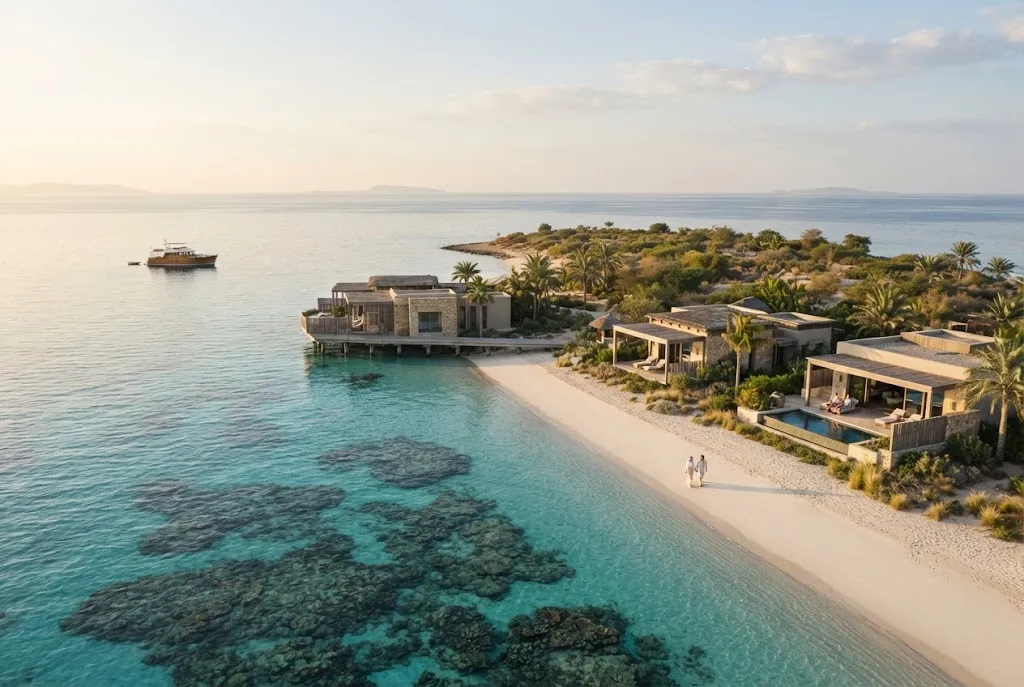
Ummahat is associated with high-end island resorts and overwater accommodation, allowing visitors to stay directly within the marine environment rather than simply visiting the coast for a day.
The island experience is designed around privacy, natural scenery and access to the sea. Guests can combine resort relaxation with snorkeling, diving, boating and other marine activities depending on the resort and current operating program.
For travelers who associate luxury with space and seclusion rather than urban entertainment, the island environment is one of the defining attractions of the Red Sea.
Sheybarah Island and Overwater Architecture
Sheybarah Island offers another distinctive interpretation of luxury on the Saudi coast.
The destination is particularly associated with futuristic overwater villas designed to sit above the Red Sea rather than dominate the island itself. Red Sea Global describes Sheybarah as an island sanctuary combining overwater villas, coral restoration initiatives and solar-powered operations.
This type of architecture reflects a broader design philosophy across the Red Sea: the natural landscape is intended to remain the primary visual experience, while buildings are carefully integrated into the environment.
What Does Regenerative Tourism Mean?
The term regenerative tourism goes beyond simply reducing environmental damage.
Conventional sustainable tourism often focuses on minimizing negative impacts. Regenerative tourism aims to go further by restoring ecosystems, supporting communities and creating positive environmental outcomes through the way a destination is designed and operated.
Red Sea Global defines regeneration as restoring the environment and enriching local communities through development and operations, with the objective of leaving nature better than before.
At the Red Sea destination, this philosophy influences energy systems, construction, conservation, marine programs and the amount of land being developed.
Renewable Energy Across the Red Sea Islands
One of the most significant aspects of the Red Sea development is its renewable-energy infrastructure.
Red Sea Global states that The Red Sea is designed as a fully off-grid destination powered by renewable energy. Its infrastructure includes a large solar installation and battery-storage system designed to supply the destination without relying on conventional grid electricity.
Shura Island is also described as being powered entirely by renewable energy generated through the wider Red Sea solar infrastructure.
This is important because luxury resorts traditionally require significant amounts of energy for air conditioning, water systems, kitchens, lighting and guest services. The Red Sea model attempts to address that demand through renewable infrastructure rather than simply offsetting consumption elsewhere.
Marine Conservation and Coral Restoration
The marine environment is central to the Red Sea experience.
Coral reefs, seagrass habitats, beaches and marine species are not simply scenic features for visitors; they form part of the ecosystem that the destination’s tourism model depends upon.
Some Red Sea island resorts incorporate coral restoration and marine conservation initiatives into their operations. Sheybarah, for example, is specifically associated with coral restoration programs alongside its hospitality offering.
The broader destination also includes marine-focused experiences that allow visitors to explore the underwater environment through diving, snorkeling and other activities.
What Can You Do on the Red Sea Islands?
A Red Sea island holiday can be much more varied than simply spending time beside a swimming pool.
- Snorkeling around coral reefs
- Scuba diving and marine exploration
- Boat and yacht experiences
- Private beach experiences
- Wellness and spa treatments
- Fine dining
- Water sports and marine activities
- Island excursions
- Wildlife and nature experiences
- Desert adventures on the mainland
The exact activities available depend on the resort and season, but the overall destination is being developed around a combination of marine, wellness, adventure and luxury experiences.
Red Sea Diving and Underwater Experiences
For many visitors, the underwater environment will be one of the main reasons to travel to the Red Sea.
The Saudi coast contains extensive coral habitats and marine ecosystems that provide opportunities for diving and snorkeling. Clear water and relatively undisturbed coastal areas can create excellent conditions for exploring reefs and marine life.
The emphasis on conservation also makes responsible behavior particularly important. Visitors should avoid touching coral, disturbing marine animals or removing anything from the sea.
A luxury marine destination is ultimately dependent on the health of the ecosystem surrounding it. Protecting the underwater environment is therefore part of preserving the experience itself.
Luxury Without the Traditional Resort Formula
The Red Sea is redefining what luxury accommodation can look like.
Instead of relying solely on large conventional hotel buildings, the destination incorporates overwater villas, low-density resorts, desert retreats and architecture designed around individual landscapes.
The resort portfolio also includes globally recognized hospitality brands, giving international travelers familiar standards while placing those experiences within a distinctly Saudi environment.
By 2026, the destination has expanded considerably beyond its first resort openings, with additional resorts and experiences continuing to launch across Shura Island and other parts of the development.
The Red Sea’s Growing Luxury Resort Portfolio
The first guests arrived at The Red Sea destination in 2023 with the opening of Six Senses Southern Dunes. The St. Regis Red Sea Resort and Nujuma, a Ritz-Carlton Reserve followed in 2024, while Shebara and Desert Rock also entered operation. Shura Island subsequently became a major new phase of the destination.
In 2026, the resort portfolio has continued to expand. Red Sea Global reports that five operational Shura Island hotels achieved LEED Platinum certification in July 2026, while additional resorts were progressing toward certification.
This rapid expansion means the Red Sea experience is evolving quickly. Travelers researching the destination should therefore check current resort openings and operating status rather than relying on older travel guides.
Red Sea International Airport
Access is a major part of making remote island tourism practical.
Red Sea International Airport provides the main air gateway for the destination, allowing guests to travel directly toward the resorts rather than treating the Red Sea as a long road journey from another Saudi city.
Red Sea Global describes the airport as the destination’s global gateway, while the wider development is being connected through roads, bridges, marine transport and resort transfers.
Shura Island is currently described as approximately a 25-minute journey from Red Sea International Airport, including the crossing over the destination’s long over-water bridge.
When Is the Best Time to Visit the Red Sea Islands?
The Red Sea can be visited throughout the year, but weather conditions influence how comfortable different activities will be.
For travelers focused on outdoor exploration, the cooler months generally provide more comfortable conditions for walking, excursions and other activities outside the water.
Official Visit Saudi information currently lists average seasonal temperature ranges for the Red Sea destination and recommends considering weather conditions when planning activities.
Summer can be considerably hotter, making early-morning and evening activities more appealing. Resort facilities, pools, wellness programs and marine excursions can also shape how comfortable a summer trip feels.
Red Sea Islands for Wellness Travel
The Red Sea concept extends beyond beaches and water sports into wellness.
Resorts across the wider destination incorporate spas, fitness facilities, wellness programs and nature-based experiences. The neighboring AMAALA development takes this concept even further, positioning wellness, longevity and transformative health experiences at the center of its destination model.
This creates an emerging distinction between different parts of Saudi Arabia’s Red Sea coast. The Red Sea destination combines marine adventure, luxury hospitality and nature, while AMAALA places greater emphasis on wellness, art and lifestyle.
The Red Sea and Saudi Arabia’s Tourism Transformation
Red Sea Islands are part of a much broader transformation in Saudi tourism.
Saudi Arabia is developing destinations that can appeal to international visitors while also giving residents new domestic travel options. The Red Sea represents one of the country’s most ambitious attempts to establish a globally recognized coastal tourism destination.
Its importance is not simply the number of hotels being developed. The project is also testing a model in which tourism infrastructure, renewable energy, conservation, hospitality and destination management are designed as one connected system.
How the Red Sea Islands Compare With Traditional Luxury Destinations
A conventional luxury beach destination often focuses on privacy, service, accommodation and scenery. The Red Sea adds another layer: the environmental system itself becomes part of the destination’s identity.
Guests are not simply staying beside a beautiful sea. They are entering a destination where renewable energy, coral conservation, low-density development and marine experiences are intended to influence how the entire visitor experience works.
This is particularly relevant to travelers who increasingly consider environmental credentials when choosing luxury accommodation.
Responsible Travel on the Red Sea Coast
Travelers also have a role to play in protecting the environment they have come to experience.
- Do not touch or stand on coral.
- Keep a respectful distance from marine wildlife.
- Do not remove shells, coral or other natural materials.
- Follow resort and marine-excursion instructions.
- Use designated paths and access points.
- Reduce unnecessary single-use waste.
- Respect local communities and cultural expectations.
- Follow restrictions around protected areas.
Responsible behavior is especially important in destinations built around sensitive coastal ecosystems. The long-term appeal of the Red Sea depends on maintaining the natural environments that make the region attractive in the first place.
Red Sea Islands vs. Other Saudi Coastal Destinations
Saudi Arabia’s western coastline offers several distinct travel experiences.
Jeddah combines urban culture, dining, history and access to the Red Sea. AlUla is centered on archaeology, dramatic landscapes and heritage. The Red Sea Islands focus much more strongly on marine environments, private resorts, wellness and high-end coastal experiences.
This makes the Red Sea particularly suitable for travelers who want a resort-focused holiday but still want nature and exploration to remain central to the trip.
Who Should Visit the Red Sea Islands?
The destination is particularly suited to travelers interested in:
- Luxury island resorts
- Marine adventures
- Scuba diving and snorkeling
- Wellness retreats
- Private beach experiences
- Fine dining
- Nature-focused travel
- Architectural design
- Sustainable and regenerative tourism
- Exclusive Saudi travel experiences
It can also appeal to travelers who have already visited Riyadh or Jeddah and want to experience a completely different side of Saudi Arabia.
Frequently Asked Questions About the Red Sea Islands
Where are the Red Sea Islands in Saudi Arabia?
The Red Sea destination is located on Saudi Arabia’s western coast between Umluj and Al Wajh and covers approximately 28,000 square kilometers, including more than 90 islands.
Which islands are part of the Red Sea destination?
Major island destinations include Shura Island, Ummahat and Sheybarah. Each has a different role within the wider destination, from resort and lifestyle experiences to secluded island accommodation and marine-focused stays.
What is Shura Island known for?
Shura Island is the central hub of The Red Sea and features luxury resorts, residences, restaurants, wellness facilities, a marina and Shura Links, Saudi Arabia’s first island golf course.
Is the Red Sea destination open to tourists?
Yes. The Red Sea destination has been welcoming guests since 2023, with additional resorts and experiences continuing to open.
Is the Red Sea in Saudi Arabia sustainable?
The destination is being developed around regenerative tourism principles. Red Sea Global states that The Red Sea is powered entirely by renewable energy, development covers less than 1% of the overall area and the company is targeting a 30% net conservation benefit by 2040.
Can you go diving at the Saudi Red Sea?
Yes. Diving, snorkeling and marine exploration are among the experiences offered across the Red Sea destination, subject to resort and excursion availability.
How do you reach the Red Sea Islands?
Most international visitors can travel through Red Sea International Airport, followed by the appropriate road, bridge or resort transfer depending on the island and accommodation. Shura Island is currently described as around 25 minutes from the airport.
Is the Red Sea suitable for a luxury holiday?
Luxury hospitality is a central part of the destination, with international hotel brands, private island resorts, overwater accommodation, fine dining, wellness experiences and marine activities forming the core visitor offering.
Final Thoughts
The Red Sea Islands represent a new chapter in Saudi Arabia’s tourism story. Their appeal comes not only from luxury resorts and spectacular coastlines but from the attempt to connect hospitality with conservation, renewable energy and the natural environment.
Shura Island provides the destination’s social and lifestyle hub, while Ummahat and Sheybarah demonstrate how secluded island resorts can be integrated into a larger regenerative tourism model. Beyond the islands themselves, the wider Red Sea destination connects marine experiences with desert landscapes, wellness, dining and adventure.
As more resorts open and infrastructure develops, the Saudi Red Sea will continue to evolve. For travelers looking for a luxury destination where the ocean and natural landscape remain central to the experience, this emerging stretch of Saudi Arabia offers something distinctly different from a traditional beach holiday.