
Hegra Saudi Arabia is one of the most extraordinary ancient sites in the Middle East, yet it stays wonderfully uncrowded compared with its Jordanian sibling Petra. Carved into golden sandstone outcrops in the desert north of AlUla, Hegra was the southern capital of the Nabataean kingdom and is Saudi Arabia’s first UNESCO World Heritage Site. Whether you are planning a dedicated heritage trip or adding a cultural stop to a wider Saudi itinerary, this guide covers the history, the tombs you must see, how to visit, entry fees in SAR and practical visitor tips for Hegra Saudi Arabia.
Hegra Saudi Arabia: A Short History of the Nabataean City
Hegra, also known as Mada’in Saleh or by its ancient name Al-Hijr, sits about 22 kilometres north of AlUla in northwestern Saudi Arabia. Between roughly the 2nd century BCE and the 2nd century CE it flourished as the second city of the Nabataean kingdom, the trading empire whose capital was Petra in present-day Jordan. At its height the kingdom controlled the lucrative incense routes carrying frankincense and myrrh from southern Arabia to the Mediterranean, and Hegra Saudi Arabia grew wealthy as the southern gateway of that trade.
The Nabataeans were master engineers as well as merchants. They carved monumental tombs directly into the sandstone, built sophisticated water systems with wells and cisterns, and left inscriptions in Nabataean, Latin and Greek that archaeologists still study today. After the Romans annexed the kingdom in 106 CE the city declined, and later centuries knew it mainly as a stopping point on pilgrimage routes. In 2008 the archaeological site of Al-Hijr (Madain Saleh) was inscribed as Saudi Arabia’s first UNESCO World Heritage Site, recognising one of the best-preserved Nabataean landscapes anywhere.
Hegra Saudi Arabia: The Tombs You Must See
The protected site contains more than 100 monumental tombs, 94 of them with decorated facades. Because visits are guided, your route will be planned for you, but these are the highlights to look out for.
Qasr al-Farid, the Lonely Castle
The most photographed monument at Hegra Saudi Arabia is Qasr al-Farid, the “Lonely Castle.” This single, free-standing tomb rises from the desert floor with a facade that was never quite finished, its lower portion left rough while the upper carving is complete. Standing alone against the sky, it has become the emblem of the site and the image most visitors carry home.
Qasr al-Bint and the Great Necropolis
Qasr al-Bint, the “Palace of the Girl,” is actually a cluster of tombs rather than a single building. This is the largest of Hegra’s necropolises, where row after row of carved facades display the classic Nabataean vocabulary: crow-step merlons along the top, pilasters, eagles, sphinxes and stylised Medusa heads. Guides will point out the inscriptions above the doorways, some of which record the names of the families buried within.
Jabal al-Mahjar and the Diwan
At Jabal al-Mahjar four enormous facades are cut into a single rock massif, an astonishing display of scale. Nearby, the Diwan is a large carved chamber that was used for religious rituals and communal gatherings rather than burials. Together with the ancient wells and the remains of the old town, these monuments give a fuller picture of daily life in a Nabataean city, not just its funerary art.
How to Visit Hegra: Tickets, Best Time and Getting There
All visits to Hegra Saudi Arabia are arranged through Experience AlUla, the official destination platform, and every visit includes a guide. Tickets are booked online in advance, with tours departing at set times through the day. Morning tours are cooler and quieter, while late-afternoon slots are prized for the golden light on the facades. During the cooler festival season, especially around Winter at Tantora, slots sell out well ahead, so book early.
The best time to visit is between October and March, when daytime temperatures are comfortable for walking between the monuments. Summer visits are possible but the desert heat is intense, so early morning is the only sensible option. Allow at least three hours for the tour itself, plus travel time to and from AlUla.
Getting there is straightforward. Fly into AlUla International Airport, which connects with Riyadh and Jeddah in about 90 minutes, then drive around 30 minutes north to the site. The meeting point for tours is the Winter Park visitor area, with transport to the monuments included in the experience. Drivers coming overland can reach AlUla from Medina in roughly four hours. If you are building a wider Saudi trip, our Riyadh guide covers the capital you will most likely fly through, and travellers arriving via the Red Sea coast can plan their onward journey with our Jeddah guide.
Hegra Entry Fees and Tour Prices in SAR
Entry to Hegra Saudi Arabia is only possible through the official guided experiences, and prices are seasonal. As a guideline, the standard guided tour has typically been priced from around SAR 95 per adult, with reduced rates for children; private tours, sunset experiences and festival-season packages cost more. Prices and inclusions change between seasons, so always check Experience AlUla for the current rates before you book. Budget a little extra for refreshments at the visitor area, though most tours keep you well supplied with water.
Practical Visitor Tips for Your Hegra Trip
- Book your tickets online before you travel, particularly between November and February and during Winter at Tantora.
- Wear comfortable walking shoes and sun protection. The site is open desert with limited shade.
- Carry water, even though tours usually provide it. The air is extremely dry.
- Do not climb on the monuments or touch the carved facades. The sandstone is fragile and the site is protected.
- Photography is allowed and encouraged, but drones need prior permission.
- Dress modestly out of respect for local customs, and bring a light layer for cool winter mornings.
- Arrive at the Winter Park meeting point at least 30 minutes before your tour time.
- Combine your visit with AlUla Old Town and Elephant Rock on the same day to make the most of the drive north.
Combining Hegra with AlUla Old Town and Elephant Rock
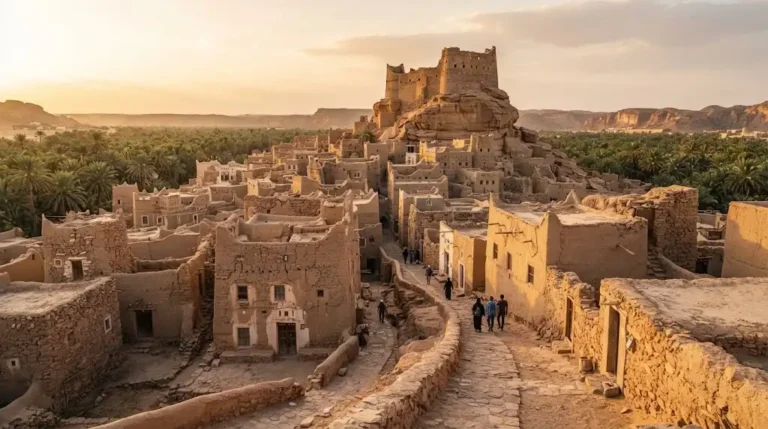
Hegra works best as part of a full AlUla day. Pair the morning tombs tour with an afternoon in AlUla Old Town, where mudbrick houses, narrow alleys and the old fort tell the story of the valley’s later settled community, a very different chapter from the Nabataean necropolis. Finish the day at Elephant Rock (Jabal AlFil), the enormous natural rock formation that glows red at sunset and is one of the most photographed landscapes in the Kingdom. Together, the three sites give you archaeology, living heritage and natural scenery in a single, unhurried day.
Frequently Asked Questions About Visiting Hegra
Is Hegra the same as Mada’in Saleh?
Yes. Hegra, Mada’in Saleh and Al-Hijr are different names for the same Nabataean site. Mada’in Saleh is the name most commonly used in Arabic, while Hegra is the ancient name now used in tourism.
How much time do you need at Hegra?
The guided tour itself takes around two to three hours. With transfers from AlUla, plan for a half day. If you are combining it with AlUla Old Town and Elephant Rock, dedicate a full day.
Can you visit Hegra without a guide?
No. All visits to Hegra Saudi Arabia are through official guided experiences booked via Experience AlUla. Independent wandering inside the archaeological zone is not permitted.
Is Hegra worth visiting if you have seen Petra?
Absolutely. The carving style is related but the setting is completely different: a quiet desert necropolis rather than a canyon city, with far fewer visitors. Most travellers find the two sites complement each other.
Hegra Saudi Arabia rewards travellers who come prepared. Book ahead, arrive early, and give yourself time to stand quietly in front of Qasr al-Farid as the light changes. Few places in the Kingdom compress so much history, from incense caravans to UNESCO recognition, into a single morning’s walk.
More AlUla and Saudi Travel Guides
Complete your AlUla trip with our guide to the AlUla Old Town, then plan the rest of your route with our season-by-season guide to the best time to visit Saudi Arabia and our first-timer friendly Saudi Arabia travel tips. If your journey continues to the capital, start with our list of things to do in Riyadh, and for the coast’s future, read our explainer on the Red Sea Project.