If you want to understand Saudi Arabia, start at the table. Traditional Saudi food is generous, aromatic and deeply social: dishes built around fragrant rice, tender meat, warm breads and spices, served to share and almost always accompanied by Saudi coffee and dates. For a visitor, it is one of the warmest introductions to the Kingdom’s culture.
This guide explains what traditional Saudi food actually is, dish by dish. You will meet the great rice platters, slow-cooked comfort dishes, crisp snacks, regional styles from Najd, the Hejaz and the Eastern Province, and the coffee ritual that frames almost every gathering, so you can order, share and enjoy with confidence.
Traditional Saudi Food at a Glance: The Flavour Map
Traditional Saudi food rests on a few simple pillars. Rice is the centrepiece of the main meal, cooked with warming spices such as cardamom, black lime, cinnamon and cloves. Wheat appears as breads, porridges and dumpling-like dishes. Meat and chicken are served generously, dates provide natural sweetness, and coffee is not an afterthought but the opening and closing act of hospitality. Flavours are aromatic rather than fiery, and portions are made for sharing.
Kabsa and Mandi: The Great Rice Dishes
Ask almost anyone to name a Saudi dish and they will say kabsa or mandi. Both are festive rice dishes served on large platters, but they are cooked in different ways and have distinct characters.
Kabsa, the National-Style Favourite
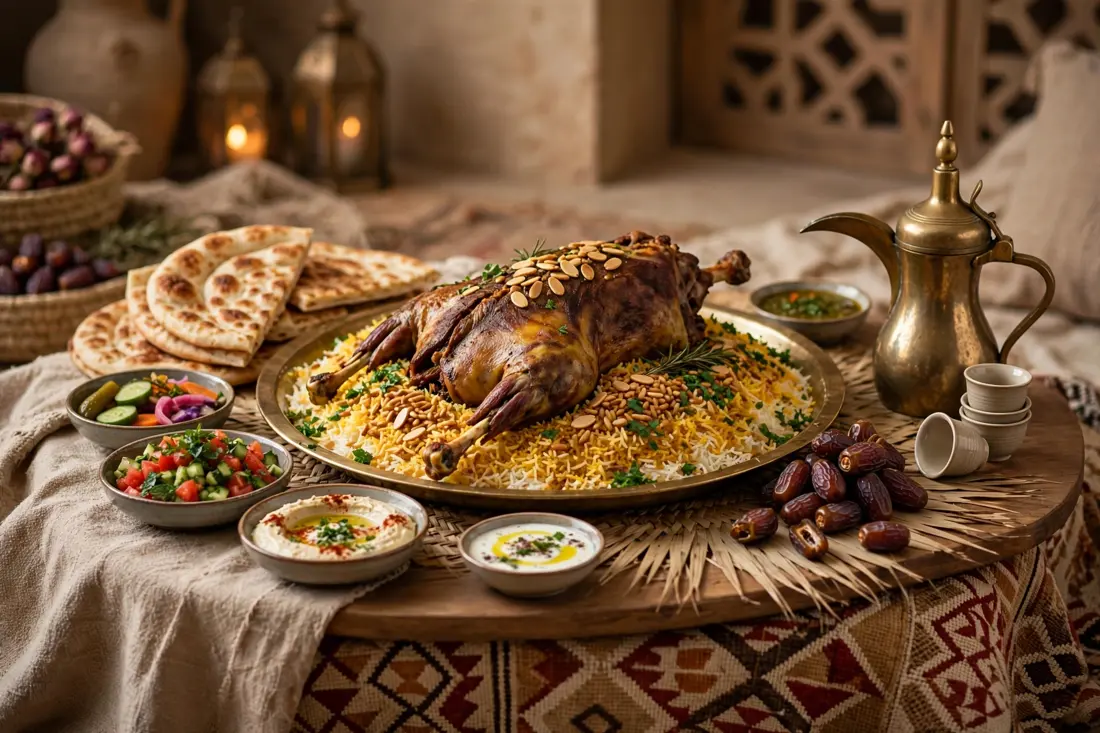
Kabsa is widely regarded as the national-style dish of Saudi Arabia. Long-grain rice is cooked in a spiced broth with tomatoes, onions and a blend of warm spices, then served with chicken or meat, often topped with toasted nuts and raisins. Every family and region has its own version, which is exactly the point: kabsa is a shared language with many local accents.
Mandi, Smoke-Infused Rice and Meat
Mandi comes from the wider Arabian Peninsula tradition and is loved across Saudi Arabia. The meat is traditionally cooked in a sealed underground oven, or tandoor-style pit, so it becomes exceptionally tender while its juices and gentle smoke flavour the rice below. The result is softer and smokier than kabsa, with rice that is often paler and delicately fragrant.
Jareesh, Harees and Saleeg: The Comfort Dishes
Beyond the big platters, traditional Saudi food includes soothing dishes built on wheat and rice. Jareesh is a savoury porridge of crushed wheat cooked slowly with meat or chicken and topped with caramelised onions; it is especially associated with Najd and is a staple of family tables and Ramadan evenings.
Harees is wheat beaten with meat into a smooth, warming porridge, prized in the Eastern Province and during Ramadan. Saleeg, from the Hejaz, is almost the opposite in style: short-grain rice cooked in broth and milk until creamy, served with roast chicken and a fresh tomato-chilli salsa known as duggus. Together, the three dishes show how varied Saudi comfort food can be.
Mutabbaq and Samboosa: Snacks and Street Food
Not every classic is a main course. Mutabbaq is a thin, folded stuffed bread, griddled until crisp and filled with spiced minced meat, egg and vegetables, or made sweet with banana or cheese. Samboosa, the Saudi samosa, is a crisp pastry triangle filled with meat, cheese or vegetables, fried in huge quantities during Ramadan and eaten year-round as a snack. Both are the flavours of souqs, bakeries and family kitchens.
Regional Styles: Najdi, Hejazi and Eastern Province Kitchens
Saudi Arabia is a large country, and its kitchens follow its geography. Najdi cooking, from the central plateau around Riyadh, is hearty and wheat-and-meat based: jareesh, hearty stews and generous rice platters suited to desert hospitality.
Hejazi cooking, from Jeddah and the Red Sea coast, is more cosmopolitan. Centuries of pilgrims and traders brought new spices and techniques, giving dishes such as saleeg and a love of seafood, tangy salads and internationally influenced sweets.
In the Eastern Province, Gulf trade shaped a kitchen rich in seafood, rice and warm spice blends, with harees and fragrant fish dishes on family tables. Travelling between regions and tasting the differences is one of the pleasures of eating in Saudi Arabia.
Saudi Breads: Khubz and Tamees
Bread accompanies almost every meal. Khubz is the everyday flatbread, soft and round, used to scoop rice dishes and stews or to wrap grilled meats. Tamees is a larger, thicker flatbread baked in a clay oven, often brushed with oil or sprinkled with sesame or nigella seeds, and commonly eaten with foul, cheese or honey at breakfast. Tearing and sharing bread is part of the meal, not an extra.
Saudi Coffee (Qahwa), Dates and the Ritual of Hospitality
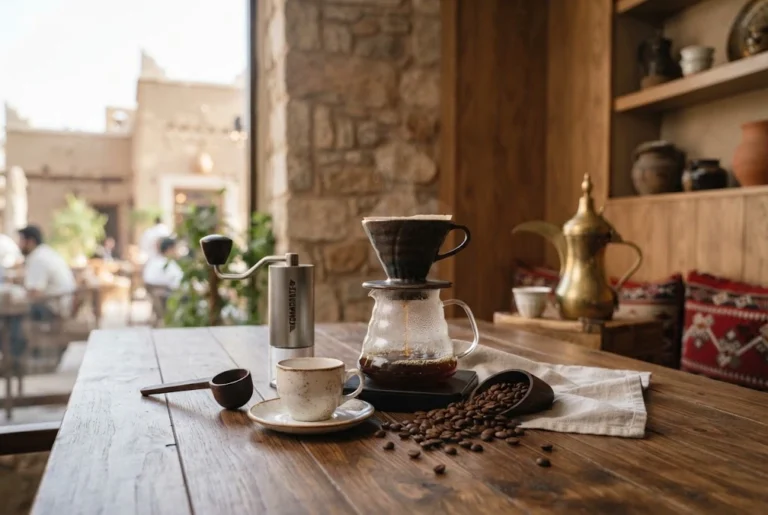
Coffee in Saudi Arabia is a ritual of welcome. Saudi coffee, or qahwa, is lightly roasted and brewed with cardamom and sometimes saffron, giving it a golden colour and a gentle, spiced flavour quite unlike a strong espresso. It is poured from a dallah, the distinctive long-spouted pot, into small cups called finjan, usually filled only partway so guests can enjoy several rounds.
Dates are served alongside almost by rule, their sweetness balancing the unsweetened coffee, and refills continue until a guest gently shakes the cup to signal they have finished. If coffee fascinates you, our Saudi specialty coffee guide explores beans, roasting and the modern cafe scene that has grown up beside this older tradition.
Traditional Saudi Desserts and Sweets
Something sweet usually ends the meal. Luqaimat are small golden dumplings, crisp outside and soft inside, drizzled with date syrup or honey and especially loved during Ramadan. Hanini, from Najd, is a warm, rich mixture of dates, browned flour, butter and spices, eaten in cooler months. Ma’amoul are delicate shortbread biscuits filled with dates or nuts, often made for Eid and family celebrations. Desserts here lean on dates, honey and gentle spice rather than heavy chocolate.
Eating Customs Every Visitor Should Know
Meals are social events. Main dishes are often served on a large shared platter placed in the centre, and everyone eats from the section in front of them. Eating with the right hand is the traditional custom, and bread or rice is often gathered skilfully with the fingers, though cutlery is always available in restaurants. Accepting at least a small cup of coffee and a date when offered is a polite way to honour your host’s welcome.
During Ramadan, the fast is broken at sunset with iftar, typically starting with dates, water, coffee and soup before the main dishes follow. Evenings come alive with food stalls and family gatherings, and visitors who join an iftar will experience Saudi hospitality at its most generous.
Where Visitors Encounter Traditional Saudi Food
You do not need a special invitation to taste these dishes. Traditional restaurants in every Saudi city serve kabsa, mandi and jareesh, and food is a highlight of any city break: our guide to things to do in Riyadh shows how easily a day of forts and museums ends with a great Saudi dinner.
On the coast, the food scene is just as rewarding, and our things to do in Jeddah guide pairs Al-Balad’s old streets with the city’s kitchens. Further north, travellers visiting Hegra in Saudi Arabia can combine Nabataean tombs with AlUla’s farm-to-table dining and date groves. Festivals, cultural seasons and family gatherings remain the most memorable places of all to encounter these flavours.
Frequently Asked Questions
What is the national dish of Saudi Arabia?
Kabsa is widely regarded as the national-style dish: spiced rice cooked in a seasoned broth and served on a shared platter with chicken or meat, nuts and raisins.
What is the difference between kabsa and mandi?
Kabsa’s rice is cooked in the spiced broth itself, giving deeper colour and flavour, while mandi is traditionally cooked in a sealed pit so the meat stays tender and the rice takes on a gentle smokiness.
What should a first-time visitor try first?
Start with kabsa or mandi for the main event, add samboosa and mutabbaq as snacks, and finish with qahwa, dates and luqaimat. That single meal covers most of the flavour map in this guide.
Final Thoughts
Traditional Saudi food is, above all, food for sharing: a platter in the middle, coffee poured without hurry and dates always within reach. Learn a handful of dish names before you travel, be willing to try the local version wherever you are, and let meals become part of your itinerary. Few souvenirs last as long as the memory of a great kabsa eaten in good company.
Taste More of Saudi Arabia
Food is one of the best ways into Saudi culture, and there is plenty more to explore. The historic lanes of Jeddah’s Al-Balad are full of traditional eateries and coffee houses, and our Saudi specialty coffee guide follows the Kingdom’s other great flavour. Plan your evenings with things to do in Jeddah, understand the customs behind the cuisine in Saudi culture and traditions explained, and time a trip around the celebrations in our Saudi festivals and events guide. Capital explorers can round things out with things to do in Riyadh.